Compact Cities: vertical ghettos?
- Mirko Vlahovic
- 1 may 2017
- 2 Min. de lectura

Since the last decades population is concentrating in urban areas, so cities are growing rapidly. According to the United Nations, 54 % of the world’s population lives in urban areas, a proportion that is expected to increase to 66% by 2050 (United Nations World Urbanization Prospects 2014). As a consequence, higher density seems to be inevitable in future cities.
An example of this situation is what has happened in Santiago de Chile, and surely in many developing countries cities. According to the census of year 1992, Santiago had 4,298,240 inhabitants (Censo de Población y Vivienda Chile 1992). Furthermore, considering the information published by Demographia, Santiago is part of one of the largest urban areas of the world, with an estimated population of 6,256,000 (Demographia World Urban Areas Report 2016). Because of this explosive population growth coupled with rising prices of scarce urban land for housing developments, the city had no choice but to expand vertically.
A cadastre made in year 2014 by the Chilean web platform Mi Entorno, showed that Santiago had 18,502 residential buildings , which represented 60% of the amount of the buildings of the whole country. In addition, as stated by a study by the real estate consultancy Astaburuaga & Grandón, the residential buildings reached in 2015 their highest average historical height in Santiago, with 8.4 floors. In fact, a very compact city with a large amount of buildings raised, that were the flagship symbol of prosperity and economic growth, nowadays represent the opposite: some neighborhood organizations reject them, citizenship asks for regulatory changes in zoning plans, and there are local authorities threats of demolition in those already built.
But how did we reach to this point? I think that the answer is simple: Santiago has being built in an unsustainable way, and if nothing is done about it this will continue to be done. Fortunately, last week the Metropolitan Intendant was brave enough and put the subject on the mat, generating a big controversy. The images shown below, represent what could be called a “vertical ghetto”, a high rise building at “Estación Central” commune, defined as the “highest commune” of the country , having buildings with 23.3 stories on average.

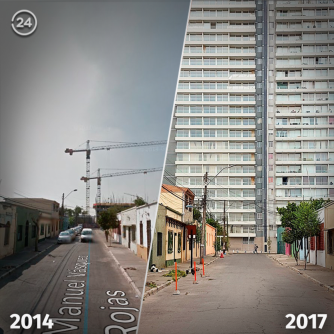

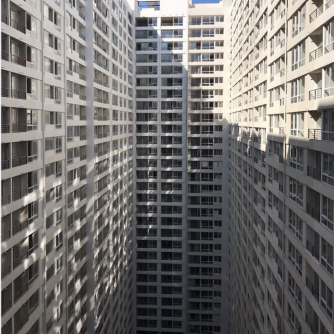
Where is the human scale, public space, livability and social equity concepts in this case? Looking at the images, i don’t recognize them at all. This is just another case of corporations only aware of making money. In defense of the developers, i must say that the area does not count with a zoning plan, but that shouldn’t be an excuse for destroying the city. Then, what are the Chilean authorities waiting to introduce construction regulations? I expect that after the emergency call made by a local authority, the chilean planners and regulators will put the bell on the cat an address this issue. If not, Santiago will become a good example of an unsustainable compact city.
Comentarios